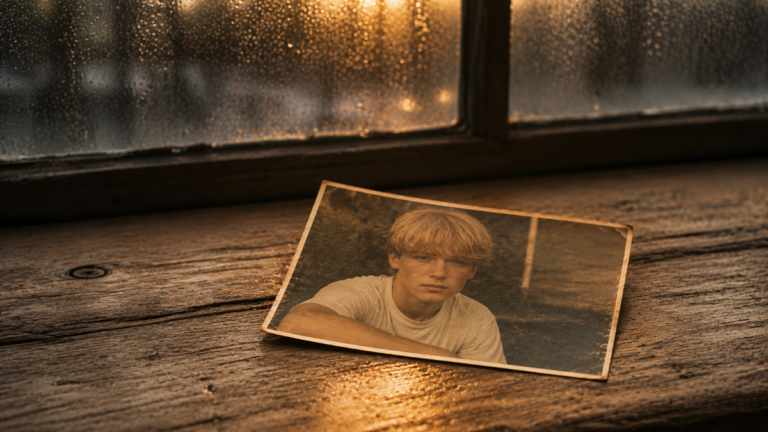
The Book Someone Loved Before Me
I don’t know when I stopped believing in coincidences.
But I know exactly when I started again.
My name is Nathan. I’m 41, and I only ever buy my books secondhand. Not to save money. It’s that new books feel so closed off. So smooth. So untouched.
A used book has already lived a little.
Dog-eared corners.
Coffee rings.
A train ticket for a bookmark—a Tuesday in March, one way.
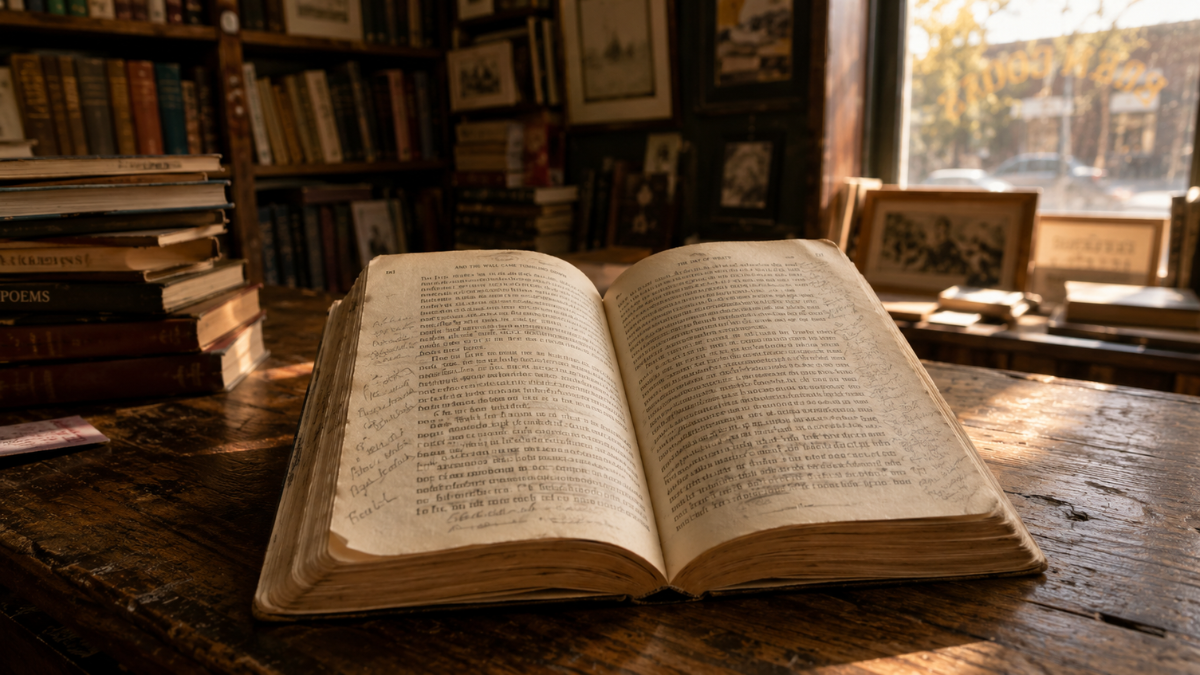
On a rainy Saturday in October, I was browsing The Ink & Anchor, a second-hand bookshop that smells of dust and vanilla. I pulled a novel off the shelf, one I’d been meaning to read for years. Three fifty. The cover is soft from all the hands before mine.
At home, I opened it.
And there she was.
Not in person. Not yet.
But her handwriting.
Pencil, narrow, leaning slightly to the right. Beside the first paragraph: “He’s lying. First sentence in. I like him already.”
I laughed out loud. Alone, in my kitchen, at half past ten at night.
I kept reading. So did she. On page 34 she’d underlined an entire sentence and written beside it: “This is what my February feels like. Every year.”
On page 78: “This made me think of my father. He’d never have said this. He’d simply have done it.”
On page 112, one single word: “Yes.”
I was no longer reading a novel. I was reading a conversation.
Sporadically she argued with the author. Sporadically she argued with herself, two pages later, crossing out her earlier note as if negotiating with her heart. Once she wrote, “I will not forgive you for this,” and I couldn’t tell whether she meant the author or someone else entirely.
I started reading more slowly.
Not for the story.
For her.
The next Saturday I went back to The Ink & Anchor. I asked the owner—a man in a wool vest with infinite patience—where the novel had come from.
“Ah, the pencil lady,” he said, as if that were a perfectly ordinary name for a person. “Brings in a box every few weeks. Reads everything. Writes in everything. Technically I should sell them as damaged.” He smiled. “But I’ve got customers who come in just for those.”
I bought four books that day.
I flipped through every single one first, right there in the aisle, like an addict.
Two of them carried her handwriting.
It went on like that all winter. I read what she had read. I found her in crime novels and poetry collections, in a book about lighthouses where she’d written: “Live in one, once. Just for the length of one storm.”
I got to know her without knowing her.
Her wit.
Her heavy Februarys.
Her father, who never spoke but always acted.
And then one evening in January, I did something I couldn’t quite explain to myself.
I picked up a pencil.
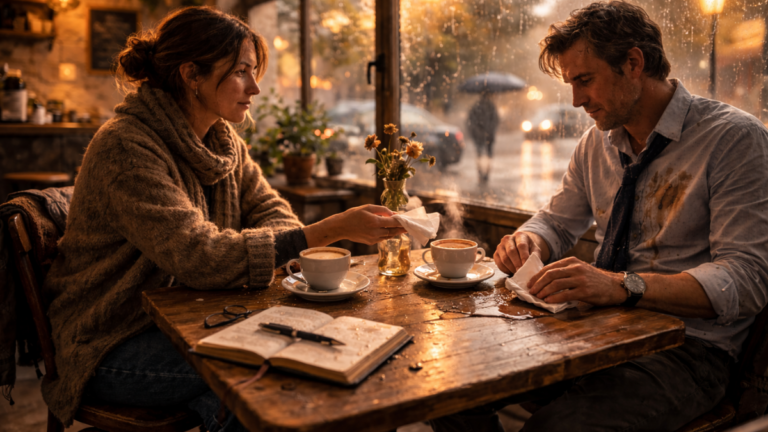
Beneath her note on page 112—beneath that lonely “Yes” — I wrote: “Me too.”
And then I answered everything. Her February: “Mine is called November.” Her father: “My mother talked constantly and never said a thing. Maybe it’s the same silence, wearing different clothes.” Her lighthouse: “I’ll take the storm. She can have the sea.”
I brought the book back to The Ink & Anchor.
“Don’t sell it,” I told the owner. “Just put it back on the shelf.”
He looked at me for a long moment. Then he nodded, as if this were not the first time someone had asked him that.
After that: nothing.
For weeks.
I came in every Saturday anyway. Bought books I didn’t need. Flipped through shelves the way other people scroll through their messages. The owner never said a word, but at some point he put a chair in the corner for me.
You can wait for a person you’ve never met. I know that now.
March came. The rain turned warmer.
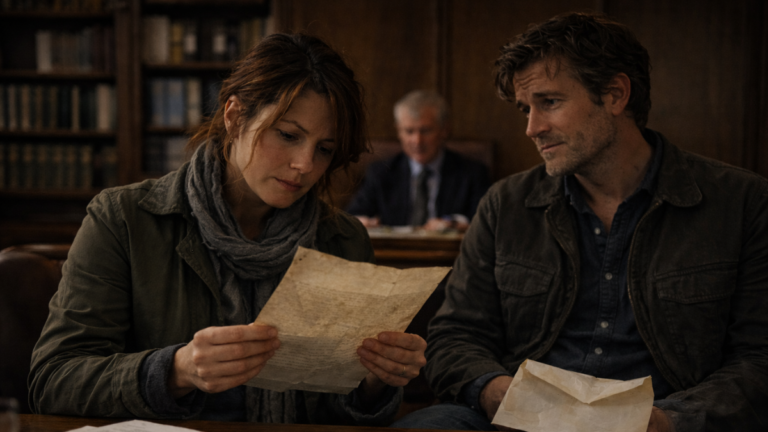
One Saturday, there was a book lying on the chair in the corner—my chair. A novel I didn’t recognize. On the flyleaf, in narrow pencil handwriting leaning slightly to the right:
“To the man who answers in pencil.
I’ve read your notes three times. The third time I cried, but that’s none of your business.
My name is Claire.
I’m usually here Saturdays, around 10 a.m.
You’re late. You’ve been late all winter.”
I looked at my watch.
Ten past ten.
I have never crossed a bookshop that fast in my life. She was standing in the poetry section, a pencil tucked behind her ear, and when she saw me, all she said was: “Finally.”
That was two years ago.
We still buy secondhand. We still write in the margins. Sporadically we argue on page 40 and make up by page 200. The owner of The Ink & Anchor claims he saw it coming from the very first day, and we let him have that.
And sometimes, watching Claire read, I think about all the notes people leave behind. In books. In each other. Never knowing if anyone will find them.
We are forever leaving traces for people we will never meet.
But sometimes—just sometimes—we meet them after all.
You only have to answer.
A pencil will do.
Ad